
Can a Cracked Tooth Be Saved? Treatment Options Explained

BDS MImpDentRCSED (UK) · Dental Surgeon, Implantologist, Thomas Dental Centre
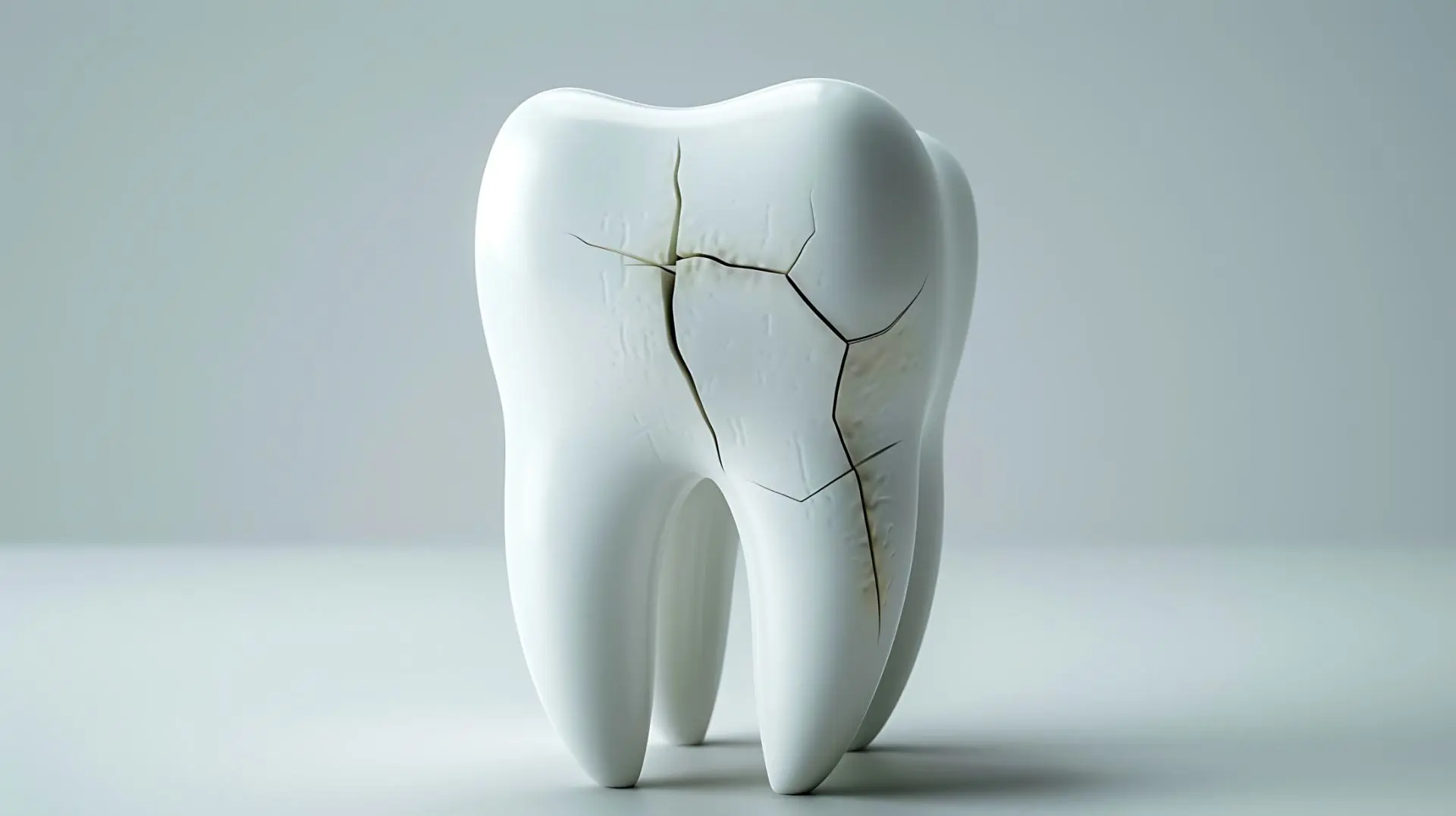
A cracked tooth is one of the most common dental problems and one of the most misunderstood. Many people brush off the pain, assuming it will go away on its own. It won't. The good news is that most cracked teeth can be saved, as long as you get treatment early enough. This guide explains exactly what happens when a tooth cracks, what the warning signs are, and which treatment is right for each situation.
What Is a Cracked Tooth?
Teeth are tough, but they are not unbreakable. Cracks happen for many reasons, and they can affect any tooth at any age. Understanding the cause helps your dentist recommend both the right treatment and the right preventive steps going forward.
- Biting hard foods, ice cubes, hard bread crust, unpopped popcorn kernels, or hard boiled sweets place sudden high force on a tooth.
- Teeth grinding (bruxism), clenching, or grinding during sleep puts sustained pressure on all teeth, wearing them down and eventually cracking them. This is very common among adults under stress.
- Large old fillings, a tooth with a big filling has less natural structure holding it together. Over years, the remaining enamel weakens and cracks under normal chewing.
- Trauma or injury, a fall, a sports impact, or an accident can crack one or more teeth, sometimes without an obvious external sign. Extreme temperature changes, eating very hot food followed immediately by cold drinks causes the tooth to expand and contract rapidly, stressing the enamel over time.
- Age and natural wear over decades makes teeth more vulnerable, especially in adults over 50.
Unlike a broken bone, a cracked tooth cannot heal on its own. Without treatment, the crack will deepen with every bite you take, moving toward the nerve, the root, and eventually splitting the tooth completely.
Different Types of Tooth Cracks
Not all cracks are the same. The type of crack determines whether the tooth can be saved, how urgent treatment is, and which procedure is needed. Here are the five main types, from least to most serious:
- Craze lines: Tiny surface cracks that only affect the outer layer of enamel. They are extremely common in adults, cause no pain, and require no treatment. Your dentist will simply monitor them during routine check-ups.
- Fractured cusp: A piece of the tooth's chewing surface breaks off, usually around an existing filling. The pulp (nerve) is rarely affected, so a crown or a new filling is usually enough. Most patients experience little or no pain.
- Cracked tooth: A crack starts at the chewing surface and runs downward, sometimes reaching the root. This is the most common type seen in dental clinics. Treatment depends on depth it may be a crown, or a root canal followed by a crown if the nerve is involved.
- Split tooth: An untreated cracked tooth that has now split into two separate pieces. Full preservation is rarely possible. Depending on the position and depth of the split, the dentist may be able to save one segment with root canal treatment, but often extraction is required.
- Vertical root fracture: A crack that begins in the root and moves upward. It is hard to detect and usually causes minimal symptoms until an infection develops. Extraction is the most common outcome, though sometimes the affected root can be removed and the tooth kept.
Signs and symptoms of a cracked tooth
Cracked teeth are frustrating to diagnose because the pain is often inconsistent. It comes and goes, and it is sometimes difficult to tell which tooth is causing it. Here are the most common symptoms to watch for:
- Sharp pain when biting or chewing — especially when you bite down on something firm, then release.
- Pain that eases when you stop biting — this release-of-pressure pain is a classic sign of a cracked tooth, because the crack briefly opens and closes under load.
- Sensitivity to hot, cold, or sweet foods — that lingers for several seconds after the trigger is removed.
- Intermittent toothache with no clear cause — pain that appears randomly and is hard to locate precisely.
- Swelling of the gum around one tooth — which can signal that infection has already set in.
- Discomfort that is difficult to pinpoint — making it easy to ignore or mistake for a general ache.
Some cracks are completely invisible to the naked eye and do not show on standard dental X-rays. Advanced diagnostic techniques such as transillumination, explorer probing, diagnostic dyes, and CBCT X-ray imaging help dentists accurately identify hidden cracks before they become more serious. At Thomas Dental Centre, we use advanced CBCT X-ray technology and modern dental imaging to detect cracks that might otherwise go unnoticed, allowing for early treatment and helping preserve your natural tooth.
Many patients visit us only after the pain becomes severe. By then, a tooth that may have been treated with a simple dental crown often requires root canal treatment or, in advanced cases, tooth extraction. If you are experiencing persistent tooth pain, sensitivity when biting, or unexplained discomfort, don't wait. Book an appointment at Thomas Dental Centre within 48 hours for an accurate diagnosis and timely treatment. As an affordable dental clinic in Abu Dhabi, we provide high-quality dental care.
Cracked Tooth Treatment options — explained simply
The right treatment depends on three things: the type of crack, how deep it goes, and whether it has reached the pulp (the nerve and blood vessels at the centre of the tooth).
- Dental bonding: A tooth-coloured resin material is applied directly to the crack, shaped to match the tooth's natural contour, and hardened with a UV light. It is the quickest and most affordable option. It works well for small, superficial cracks or minor chips on front teeth. The entire procedure takes one visit and requires no numbing in most cases.
- Dental crown: A crown is a custom-made cap that fits over the entire tooth, holding it together and preventing the crack from spreading further. It is the most common treatment for cracked teeth that have not yet reached the nerve. Crowns at Thomas Dental Centre are made from high-quality porcelain or ceramic they look and feel like natural teeth. The process typically takes two visits: one to prepare the tooth and take impressions, and one to fit and cement the permanent crown.
- Root canal treatment: If the crack has reached the pulp and caused infection or severe nerve damage, root canal therapy is needed before placing a crown. The procedure removes the infected pulp, cleans and seals the root canals, and then a crown is placed over the tooth to protect it. Root canal treatment has a very high success rate and is performed under local anaesthetic most patients report feeling no pain during the procedure, only mild soreness in the days after.
- Dental veneers: For surface cracks on front teeth where aesthetics are the main concern, a thin porcelain shell (veneer) bonded to the front of the tooth can conceal the crack and restore the appearance of the smile without removing much tooth structure.
- Tooth extraction: When a crack is too severe to restore such as a split tooth or a vertical root fracture reaching deep below the gum line extraction becomes the safest option. Removing the tooth stops pain and prevents infection from spreading. Once healed, the gap can be replaced with a dental implant or a dental bridge, restoring full function and appearance.
A crack caught at the bonding or crown stage is significantly less complex and less costly than one that has progressed to root canal therapy or extraction. Every week of delay allows the crack to deepen further toward the root.
When is a cracked tooth unsaveable?
In most cases, a cracked tooth can be saved. However, extraction becomes the only viable option when:
- The crack runs below the gum line and into the root.
- The tooth has split completely into two separate pieces.
- There is significant bone loss around the root due to a long-standing infection.
- There is not enough healthy tooth structure remaining to support a crown.
At Thomas Dental Centre, extraction is never our first recommendation. We always explore every restorative option before suggesting removal. But when extraction is the right decision, it is not the end of your smile. A dental implant placed after healing looks, feels, and functions exactly like a natural tooth.
What to do right now?
If you think you have a cracked tooth, follow these steps while you arrange your appointment:
- Manage the pain: Take over-the-counter pain relief such as ibuprofen to reduce discomfort and any swelling. A cold compress held against the outside of your cheek also helps. Avoid putting pressure on the affected side.
- Cover sharp edges with dental wax: If a piece has broken off and left a sharp edge, dental wax available at most pharmacies in Abu Dhabi can be pressed over it to protect your tongue and cheek until you reach the clinic.
- Eat soft foods only: Avoid anything hard, crunchy, chewy, or sticky. Stick to soups, smoothies, yoghurt, and soft foods until you have been seen by a dentist. Chewing on the cracked tooth risks splitting it further.
- Book an appointment as soon as possible: If you have severe pain, visible swelling, or a large piece of tooth broken off, this is a dental emergency call the clinic immediately. Even if the pain is mild, do not wait more than 48 hours. The sooner you come in, the more options your dentist has.
Book your cracked tooth assessment today
At Thomas Dental Centre, located on Al Falah Street , Abu Dhabi, we have been caring for patients since 2003, over 20 years of experience in comprehensive dental care. Our team includes qualified dental surgeons and specialist practitioners. We are fully licensed and approved by the Department of Health (DOH), UAE, which means every treatment you receive here meets the highest regulatory standards in the country. We use advanced dental imaging technology to detect cracks that standard X-rays can miss, allowing us to diagnose accurately and recommend the right treatment the first time. Whether your tooth needs a simple bonding, a crown, a root canal, or a full restorative plan after extraction, our team will walk you through every step clearly, answer every question you have, and give you a transparent cost estimate before anything begins. We do not rush diagnoses and we do not recommend unnecessary procedures. A cracked tooth gets worse with every day that passes. The sooner you come in, the more options you have and the simpler the treatment is likely to be. Book your appointment today and let us help you save your tooth.
Frequently Asked Questions
Can a cracked tooth heal on its own?
Can a cracked tooth be saved without a root canal?
pulp and caused nerve damage or infection. If the pulp is still healthy, a dental crown placed
over the tooth is usually enough to protect it and stop the crack from spreading.
What happens if a cracked tooth is left untreated?
and cause an infection or abscess which is extremely painful and can spread to the surrounding
bone. At that stage, root canal treatment or extraction becomes unavoidable. Treating a crack
early is almost always simpler, faster, and more affordable.
How much does cracked tooth treatment cost in Abu Dhabi?
option and is completed in a single visit. A crown or root canal therapy involves more time and
materials and is priced accordingly. At Thomas Dental Centre, we carry out a thorough
examination first and give you a clear, transparent cost estimate before any treatment begins so
there are no surprises.