
Veneers vs Crowns: Which Is Better for Your Smile?

BDS MImpDentRCSED (UK) · Dental Surgeon, Implantologist, Thomas Dental Centre
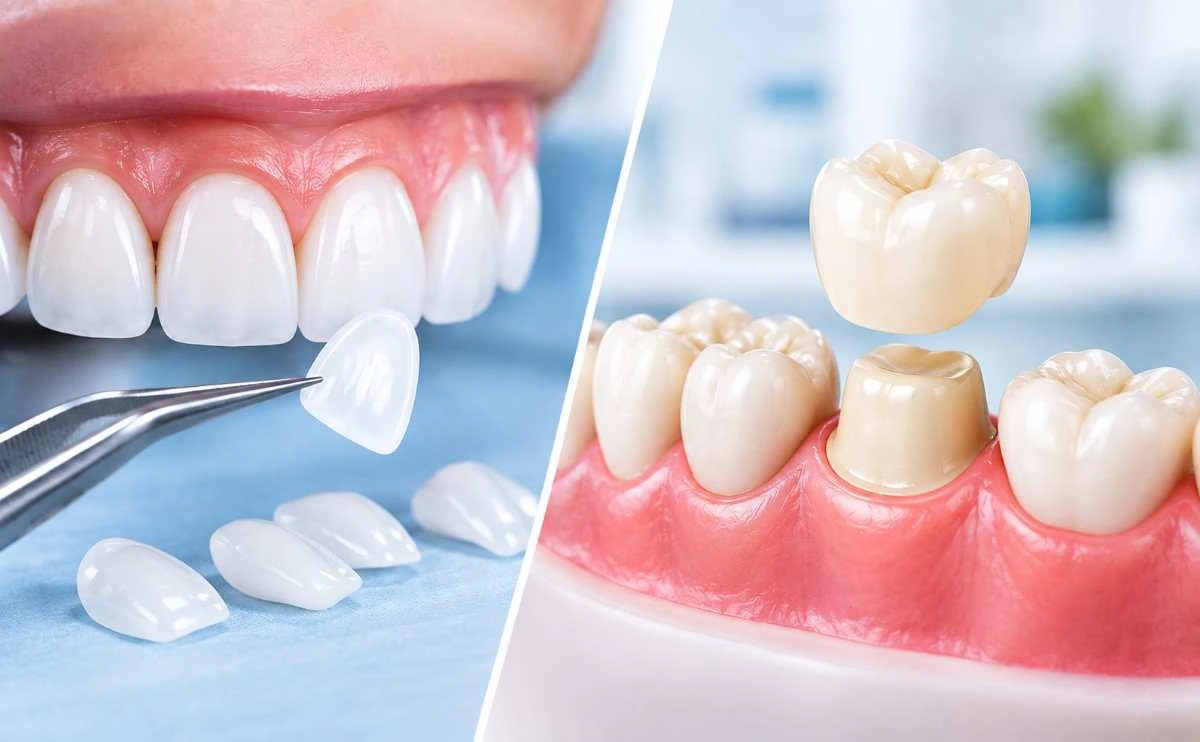
If you're looking to fix a chipped tooth, close a gap, or simply improve the way your smile looks, two treatments usually come up: veneers and crowns. Both can transform your smile, but they solve different problems and involve different levels of commitment to your natural teeth.
This guide compares veneers and crowns side by side what each one actually does, how they differ in cost and durability, and how to know which one fits your situation. The goal isn't to declare one universally "better," but to help you understand which is better for you.
What Are Dental Veneers?
A veneer is a thin shell, usually made of porcelain or composite resin, bonded to the front surface of a tooth. Veneers are primarily a cosmetic solution they're used to correct the appearance of teeth that are discolored, slightly chipped, uneven, or gapped, while leaving most of the natural tooth structure intact.
Best suited for: cosmetic concerns on teeth that are otherwise structurally healthy.
What Are Dental Crowns?
A crown is a cap that covers the entire visible portion of a tooth, from the gumline up. Unlike veneers, crowns are typically used to restore a tooth that has been significantly damaged, decayed, or weakened for example, after a root canal or a large fracture. Because a crown encases the whole tooth, it also adds structural strength.
Best suited for: teeth with substantial damage, decay, or the need for extra strength and protection.
Veneers vs Crowns: Key Differences
Purpose
Veneers are cosmetic-first, correcting how a tooth looks. Crowns are restoration-first, protecting and rebuilding a tooth that's been compromised.
Amount of Tooth Structure Removed
Veneers require minimal removal of enamel from the front surface only. Crowns require reshaping the entire tooth to make room for the cap, meaning more of the natural tooth is altered.
Durability
Crowns are generally more durable since they cover and reinforce the whole tooth, often lasting 10–15 years or longer with proper care. Porcelain veneers typically last 10–15 years as well, but they're more exposed to chipping since they only cover the front surface.
Cost
Veneers are often (though not always) less expensive than crowns, since they involve less material and a simpler procedure. Costs vary by material, case complexity, and clinic, so a consultation gives the most accurate comparison.
Appearance
Both can look highly natural when done well. Veneers are specifically designed to optimise aesthetics, shape, shade, and symmetry since that's their main purpose. Crowns are designed first for function, with modern materials also achieving a natural look.
Reversibility Veneers are minimally invasive but still permanent once enamel is removed. Crowns involve more significant reshaping and are not reversible either. Neither treatment should be viewed as temporary or easily undone.
Which One Is Right for You?
Choose veneers if: your teeth are structurally sound but you want to improve color, shape, or minor alignment issues.
Choose crowns if: a tooth is decayed, cracked, weakened after a root canal, or needs full-coverage protection.
Not sure which applies? Many patients need a mix crowns for damaged teeth and veneers for cosmetic touch-ups elsewhere. A dentist's evaluation, including X-rays, is the only reliable way to know which treatment matches your specific tooth condition.
What Happens During Consultation and Treatment
Both treatments typically start with an exam and, if needed, X-rays to assess the tooth's health. From there:
Veneers: A thin layer of enamel is prepared, an impression is taken, and a custom shell is bonded to the tooth usually completed in one to two visits.
Crowns: The tooth is reshaped more extensively, a temporary crown may be placed while the permanent one is made, and the final crown is cemented in a follow-up visit.
Choose the Right Smile Solution with Thomas Dental Centre
Choosing between veneers and crowns depends on your dental needs, the condition of your teeth, and your desired results. Veneers can be a suitable option for improving the appearance of stained, slightly damaged, or uneven teeth, while crowns are often recommended when a tooth needs greater protection due to significant damage or weakness. A professional dental assessment is the best way to determine which treatment is right for you.
At Thomas Dental Centre, we carefully assess your teeth and recommend a personalised treatment based on your oral health, functional needs, and cosmetic goals. If you are considering veneers or crowns in Abu Dhabi, our dental team can help you understand your options and choose a solution for a healthy, natural-looking smile.